
A Pre-Paint Dimmer Test Prevented LED Flicker in a Dubai Guest-Washroom Relight
Should final paint be approved before the retained two-wire dimmer has been tested with the exact LED load? In the proposed Dubai guest-washroom case, low-end instability appeared while the switch box and ceiling access were still open, but the project date, tester, product models and signed results have not been supplied, so the claimed avoided rework cannot yet be published as verified fact.
The pre-paint dimmer test exposed the guest-washroom LED problem before finishes were closed
The case is not ready for publication as a verified project record. The available account describes unstable low-end LED dimming on a retained two-wire control in a Dubai guest washroom. Testing reportedly took place before accessory plates and painted finishes were closed, when the electrician could still reach the switch box and ceiling connections.
That sequence is technically credible, but credibility is not proof. The file lacks the project diary, privacy-safe property description, test date, circuit schedule, product labels, photographs, signed commissioning sheet, corrective-action record and painting programme. Those documents must establish who tested the circuit, what failed, which electrical requirements governed the work and whether the correction actually prevented finished-surface rework.
LED efficiency does not establish dimmer compatibility. ENERGY STAR states that qualified LED lighting uses at least 75 percent less energy and lasts up to 25 times longer than incandescent lighting, but those figures do not prove that a particular driver will operate correctly on a particular two-wire dimmer.
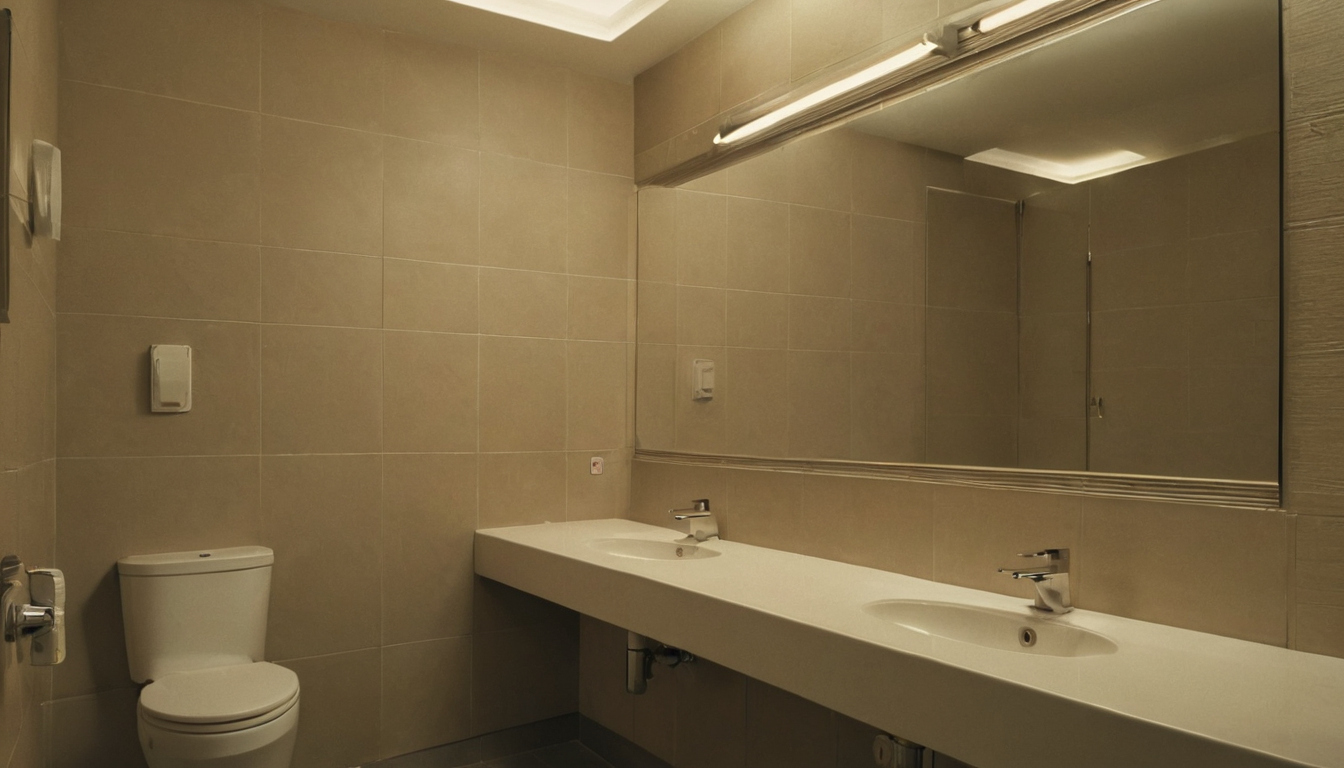
The pre-paint dimmer test exposed the guest-washroom LED problem before finishes were closed shown with practical context cues.
The case record should address these risks before any result is claimed:
- Location and property: Record a privacy-safe Dubai area and identify whether the property is an apartment or villa.
- Project requirements: Name the applicable authority rules, building-management requirements and editions in force on the test date.
- Circuit and load: Record the circuit reference, luminaire quantity, actual LED input wattage, connected load, driver arrangement and protective device.
- Retained control: Photograph the dimmer label and switch-box conductors. Confirm whether the control was two-wire and whether a neutral was absent.
- Observed symptom: Record flicker, pulsing, dropout, delayed start, residual glow or noise using the commissioning sheet’s wording.
- Access condition: Use dated photographs or diary entries to show which boxes, junctions and ceiling openings remained accessible.
- Avoided rework: Align the test, delivery and correction dates with the painting programme. Do not infer avoided repainting merely because a fault was found early.
Moisture evidence also belongs in a washroom record. The U.S. Environmental Protection Agency advises fixing condensation and wet or damp spots promptly. Any staining or moisture near a fitting must therefore be inspected rather than folded into a dimmer diagnosis.
Unrelated design benchmarks should not be used as electrical evidence. For example, the 2010 ADA Standards place accessible dining and work surfaces between 28 and 34 inches above the finished floor or ground; that requirement does not determine whether a washroom dimmer and LED driver are compatible.
What exactly happened when the existing two-wire dimmer reached its low setting?
The supplied material does not establish the dimmer position or trim point at which instability began. A publishable account must state whether the symptom appeared during start-up, a downward sweep, steady minimum or warm operation, and whether every connected LED behaved in the same way.
The electrician must separate compatibility problems from loose terminations, defective lamps or drivers and abnormal supply conditions. If no measurements were taken, the article should report only the visible symptom and tested corrective action, not an assumed cause. Once those records are available, the next decision becomes specific: an interior designing company must verify the exact dimmer, driver and LED combination.
An interior designing company must verify the exact dimmer, driver, and LED combination
An interior designing company should not approve an LED dimmer from wattage alone. A retained two-wire circuit needs complete model numbers, manufacturer compatibility evidence, the driver’s control method, load limits, gang derating and a wiring diagram that expressly permits the installed arrangement.
Which model-number fields belong in the compatibility schedule?
The compatibility schedule should identify what is installed, not what appeared in the original quotation. The interior decoration company and electrical contractor should record the following fields:
Location and circuit: Room name, distribution-board circuit reference and dimmer gang position.
Dimmer: Manufacturer, complete model number, product revision, rated supply, control type, stated LED load range, gang derating, ambient limits and required accessories.
LED equipment: Manufacturer and full model number for each lamp, driver or integrated luminaire, together with quantity, actual input wattage, input and output ratings where applicable, and dimming method.
Installed load: Quantity multiplied by actual LED input wattage, checked against any manufacturer limit on lamp count. The calculation should account for every load connected to that control.
Compatibility evidence: The exact combination’s entry in the dimmer manufacturer’s compatibility list, including the list’s publication date or revision.
Wiring evidence: The permitted two-wire diagram and any restrictions involving a neutral conductor, bypass device, minimum-load accessory or other component.
Verification: Photographs of installed labels and packaging cross-checked against invoices, followed by the checker’s name and date.
A missing suffix or revision is not a minor paperwork gap. Without it, the checker cannot establish that the compatibility entry, load limits or wiring instructions apply to the product fixed on site.
Why is the circuit’s minimum LED load more important than an equivalent-wattage label?
The connected load must use actual LED input wattage, not the incandescent-equivalent figure printed on retail packaging. Equivalent wattage compares light output. It does not describe the electrical load seen by the dimmer.
A low-load circuit is not automatically defective, and a two-wire dimmer does not automatically cause flicker. Approval depends on whether the installed load falls within that dimmer model’s stated LED range and whether each lamp or driver accepts its control method. Compatibility records narrow the decision, but only testing proves site performance.
An interior designing company must verify the exact dimmer, driver, and LED combination shown with floor, wall, and fixture relationships visible.
How should the exact LED and dimmer combination be tested before painting?
The electrician should operate the complete circuit through start-up, full output, repeated low-end sweeps, steady minimum, switch-off and restart. Every intended lamp, driver, dimmer and permitted accessory must be connected during the test.
The commissioning sheet must record more than whether the LEDs switched on
The commissioning sheet should identify the date, time, circuit reference, product models, connected quantity, actual load, instruments, tester and witness. Temporary components must be identified because they weaken the result.
- Record the starting condition. Note whether the circuit is cold or warm and record the status of the fan, illuminated mirror, sensor and relevant connected equipment.
- Switch on at the agreed setting. Record prompt or delayed start, uneven response, flashing and audible noise.
- Raise the dimmer to full output. Confirm that every fitting remains lit and note abnormal buzzing from the driver or dimmer.
- Sweep down through the range. Follow the manufacturer instructions or project acceptance range. Record pulsing and the point at which a lamp drops out.
- Hold the agreed minimum. Record the duration and whether output remains stable. Repeat the sweep and hold for the agreed number of cycles.
- Switch off and restart. Record residual glow, clean switch-off and restart after a stated pause. Repeat warm if the approved test method requires cold and warm checks.
Before-and-after tests should use the same load, sequence, observation periods and acceptance criteria. If paint preparation overlaps testing, follow the U.S. Environmental Protection Agency recommendation to increase ventilation while using VOC-emitting products. Record fan status so a changing electrical load does not confuse the observations.
Visible flicker and measured flicker require different evidence
A witness can record visible flicker, but that observation neither identifies the cause nor quantifies temporal light modulation. The U.S. Department of Energy’s flicker guidance explains that visual effects depend on modulation characteristics and viewing conditions.
A phone video can document a symptom, but it is not formal measurement evidence. Any numerical flicker result needs an appropriate method and a record of the instrument, setup, selected metric, calibration status and applicable guidance. The corrective action must then pass the same low-end test.
The corrective action must be proven by a before-and-after low-end test
The record must identify exactly what changed, whether dimmer, driver, lamp, wiring, programming or connected load. On a retained two-wire circuit, the final arrangement must follow the manufacturer’s permitted wiring diagram and pass the same sequence that exposed the fault.
The corrective action must be proven by a before-and-after low-end test shown as an editorial planning reference.
Which change resolved this specific guest-washroom circuit?
The supplied evidence does not identify the original and replacement model numbers, the electrician’s signed diagnosis or the final wiring arrangement. The draft is therefore not ready to claim a specific remedy.
A signed variation or as-built record must name each retained, replaced or rewired component. If the electrician adjusted a low-end trim, the file should include the final setting, the person who made the adjustment and the manufacturer instruction permitting it. Matching commissioning sheets should record stable minimum output, dropout, noise, residual glow, restart and switch-off.
Could the replacement part be obtained before the painting programme moved on?
A claim of avoided rework needs dated supplier stock confirmation, a purchase order, delivery evidence, installation date and actual lead time. Those dates must align with the painting programme and the last point at which switch boxes, accessory plates and driver access could remain open without damaging finished paint.
Site photographs should show the corrected assembly before plates and access points were sealed. Compatibility may explain the control fault, but bathroom conditions still require a separate electrical and moisture-zone check.
Bathroom LED flicker requires electrical and moisture-zone checks, not guesswork
Bathroom lighting must comply with the requirements governing the recorded Dubai project and with the manufacturers’ instructions. Abnormal heat, burning odour, arcing, repeated tripping or a loose accessory requires isolation and inspection by an appropriately authorised electrician.
Flicker alone does not establish a hazard or cause. An electrician must exclude loose terminations, damaged insulation, moisture entry, heat damage and incorrect protective-device operation before attributing low-end instability to control compatibility.
The project file should identify the property’s washroom classification and applicable moisture zones. Those records determine the required environmental rating at each luminaire position. The file should also cover earthing, bonding, circuit protection, residual-current protection where required, and the dimmer and driver clearances.
Paints, varnishes, cleaning products, building materials and furnishings are among the indoor sources of volatile organic compounds identified by the U.S. Environmental Protection Agency. That indoor-air issue requires ventilation and safe work planning, but it should not be presented as the electrical cause of flicker.
Accessibility requirements also remain a separate design check. The 2010 ADA Standards specify a 30 by 48 inch clear floor or ground space for wheelchair positioning where those standards apply. That clear space does not replace electrical inspection or manufacturer compatibility evidence.
When does a flickering bathroom light require immediate electrical inspection?
Arrange prompt isolation and inspection if flicker occurs with heat at the plate or fitting, a burning smell, crackling, visible arcing, repeated protective-device operation, water staining, corrosion or damaged accessories. Occupants should follow the property’s approved isolation and reporting procedure rather than removing a plate or opening a fitting.
The pre-paint handover must include compatibility evidence and signed commissioning results
Before final painting, the interior designing company should issue a traceable controls record, not a verbal assurance that the LEDs work. Acceptance requires matching product identities, approved wiring, stable operation through the agreed dimming range and a clear list of unresolved defects. For related context, review planning lighting circuits and accessible driver locations before ceiling closure.
The handover file should include the final compatibility schedule, manufacturer datasheets, permitted wiring diagrams, signed before-and-after results, electrical certification and required approvals. The as-built drawing should identify circuits, switches, drivers, access points and any retained two-wire arrangement. This complements checking whether a residential lighting proposal includes controls and commissioning.
The pre-paint handover must include compatibility evidence and signed commissioning results shown with practical context cues.
What should a client ask an interior decoration company before approving final paint?
- Do the recorded model numbers match the products remaining after handover?
- Does manufacturer evidence cover the exact combination, connected load, accessories and wiring?
- Does the signed sheet record low-end stability, noise, dropout, switch-off and restart?
- Are failures still listed as open defects, with plates and access points unsealed?
- Are warranty information, replacement part numbers and maintenance-access instructions included?
- Who owns controls coordination among the designer, electrician, lighting supplier and painter?
For future home interior design work, make exact-combination commissioning a signed pre-paint hold point rather than a handover afterthought.
Frequently asked questions
How do you stop LED lights from flickering on a dimmer when the existing switch box has only two wires?
Have an authorised electrician identify the dimmer, lamps or luminaires, drivers, connected load and permitted wiring. The remedy may involve a compatible dimmer, driver, lamp, approved accessory or circuit alteration, but the manufacturer documentation and site test must determine the choice.
Why might a bathroom LED light flicker only at the lowest dimmer setting?
The exact combination may become unstable near its lower operating limit. Other possible defects must still be excluded, including loose connections, a faulty lamp or driver, moisture damage and supply problems.
Are flickering LED bathroom lights dangerous, and which warning signs require immediate electrical inspection?
Flicker alone does not prove danger. Isolate and report the circuit promptly if flicker accompanies heat, burning odour, crackling, arcing, repeated tripping, corrosion, water staining or damaged wiring accessories.
Can a phone camera or flicker-meter app prove that an LED and dimmer combination has passed commissioning?
No. A phone can help document a visible symptom, but formal numerical results require suitable measurement equipment, a stated method and recorded test conditions. Commissioning must also cover start-up, low-end stability, dropout, noise, switch-off and restart.